Every reprint horror story starts the same way: a logo rebuilt from a JPG, colours eyeballed on an uncalibrated monitor, and a deadline that leaves no room for proofs. The fix is unglamorous but powerful — one master file, built correctly, reused for years.
What a master file actually contains
A proper master file is layered, labelled and linked. The logo lives as vectors, never embedded pixels. Spot colours carry their Pantone references alongside CMYK builds. Fonts are outlined or packaged. Bleed, trim and safe areas are marked on separate, non-printing layers so any printer can see exactly how the piece is meant to be cut.
When we onboard a new client, the first hour is almost always spent rebuilding this file. It feels like overhead; it pays for itself on the second order.
A thousand perfect reprints all trace back to one careful afternoon with the master file.
The three checks before every run
- Resolution: continuous-tone images at 300dpi at final size — no exceptions for hero imagery.
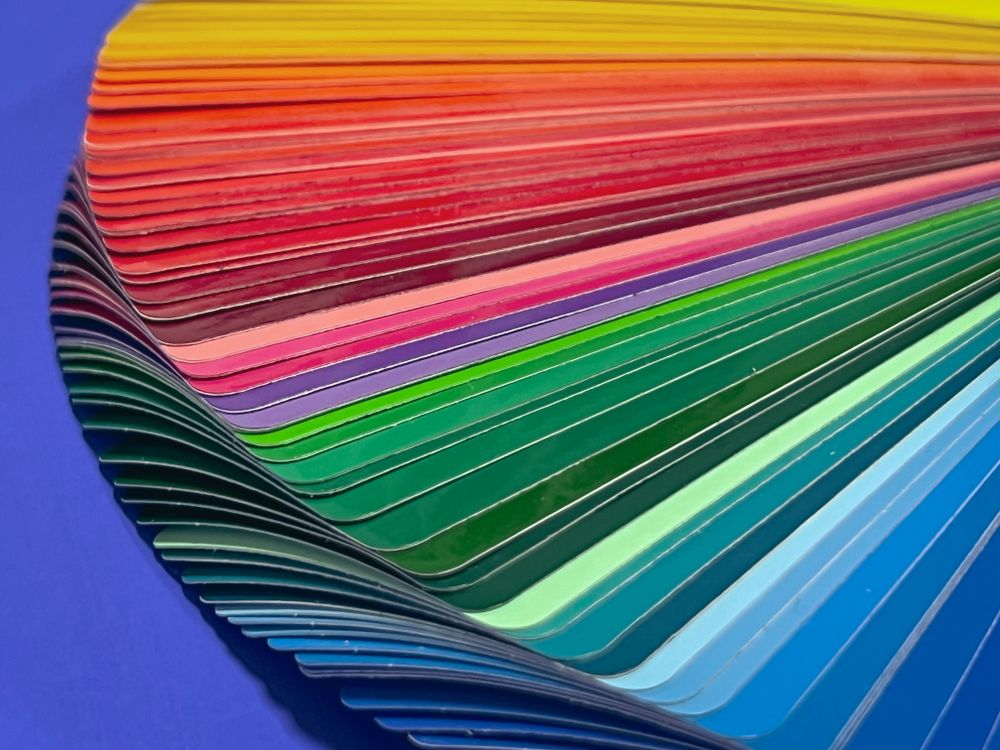
- Colour: brand swatches verified against a physical proof, not a screen.
- Fonts: outlined or packaged, with a PDF/X export that embeds everything.
Do those three things and your thousandth print looks like your first. Skip them and every reorder becomes a small gamble — one that gets more expensive as quantities grow.
Where we keep yours
Every Loomvale client gets a versioned archive: master files, proofs and colour references stored with the job history. When you reorder two years later, we pull the same file, check it against the same swatch, and print. That is the whole secret — there is no secret, just discipline.
