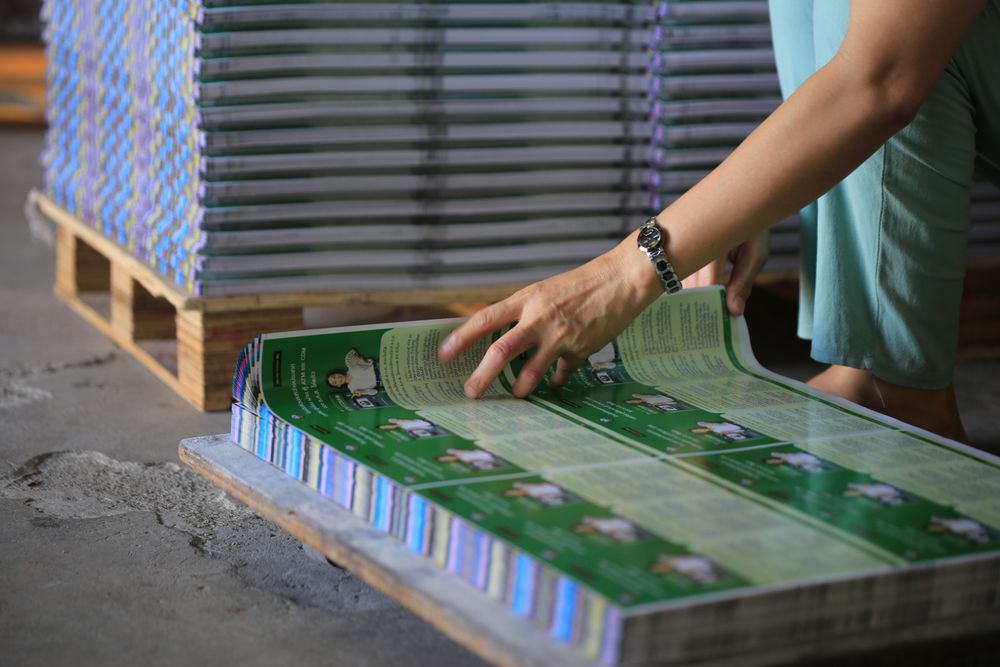
Fresh off the press, everything looks perfect. The real test comes later — sunlight through a shop window, steam behind a café counter, two winters on a van door. Prints age, but they don't have to age badly.
Paper matters more than ink
Most fading people blame on "cheap ink" is actually paper failure: uncoated sheets absorb moisture, swell and yellow. For anything displayed longer than a season, we specify acid-free, FSC-certified stocks with the right coating — matte for reading distances, gloss or laminate where fingers and weather get involved.
Lamination isn't an upsell. On packaging and wraps, it's the difference between one season and five.
Match the finish to the job
- Soft-touch laminate: packaging that gets handled daily — boxes, labels, book covers.
- UV-cured inks: anything outdoors, from billboards to full vehicle wraps.
- Archival giclée: art prints and posters meant to outlive their frames.
For mugs and drinkware the rule is simpler: kiln-cured ceramic inks survive thousands of dishwasher cycles. Anything less belongs on a shelf, not in a kitchen.
Store the spares properly
Keep backup stock flat, dry and out of direct sun — a cupboard beats a garage every time. And when you reorder, ask for the same stock code: manufacturers quietly reformulate papers, and matching the original code is how reprints stay invisible next to old stock.
